Before Buddhism, Hinduism, or any other form of religion was introduced into Thailand, there was only one similar belief, that was that a spirit world existed. Not only did the spirits exist, but they were mightily powerful and influential. This belief is called Animism, and it manifests itself in the form of spirit worship.
It might not be strictly correct to call Animism a religion; perhaps it is better categorized as a spiritual belief (spirit worship), and it is often said to be the oldest form of worship known to mankind.
Animism is practiced on a daily basis by most Thai people, regardless of their other religious beliefs, and is evident in one form or another almost everywhere you go.
Examples of Animism in Thailand
In Thailand, there is a rather unique religious and spiritual harmony, what you might call a “spiritual fusion” with Buddhism, Hinduism, and Animism all playing a part in the day-to-day life of Thais.
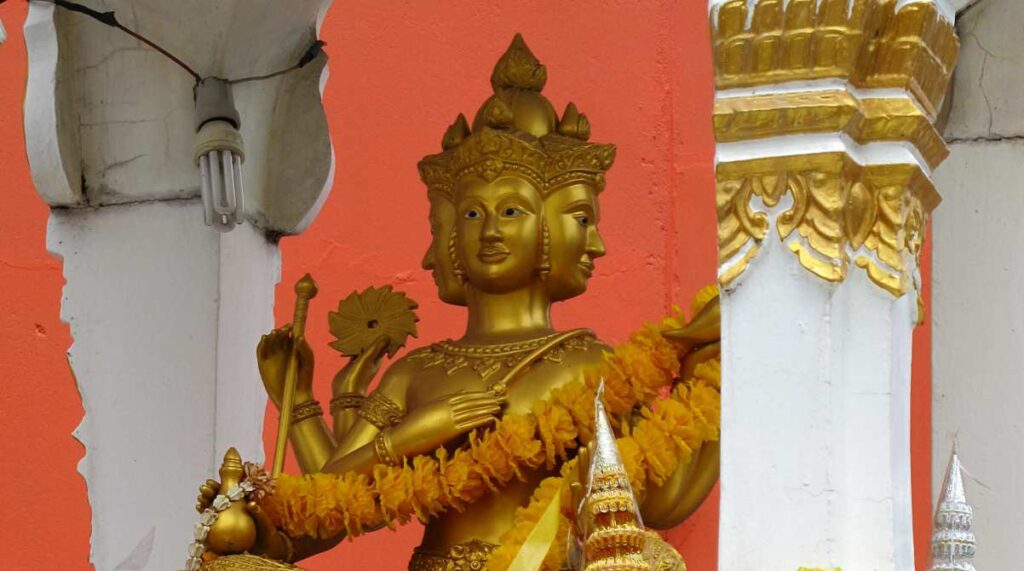
Most people are familiar with the Buddha and Buddhist rituals in Thailand. However, Hinduism and Animism are often misunderstood and misinterpreted by visitors to Thailand. Acts of Animism and Hinduism are often presumed to be Buddhist in nature, a good example is the Hindu deity Brahma (photo below), who is often mistaken for a four-faced Buddha.
Spirit Houses in Thailand
In Thailand you can find examples of Animism in nature, architecture, and social behavior, most commonly in the form spirit houses situated outside most homes, businesses, banks, and hotels. In reality, spirit houses (see photo below) can be found everywhere from outside homes, to rice fields, public parks, and next to lakes and ponds.
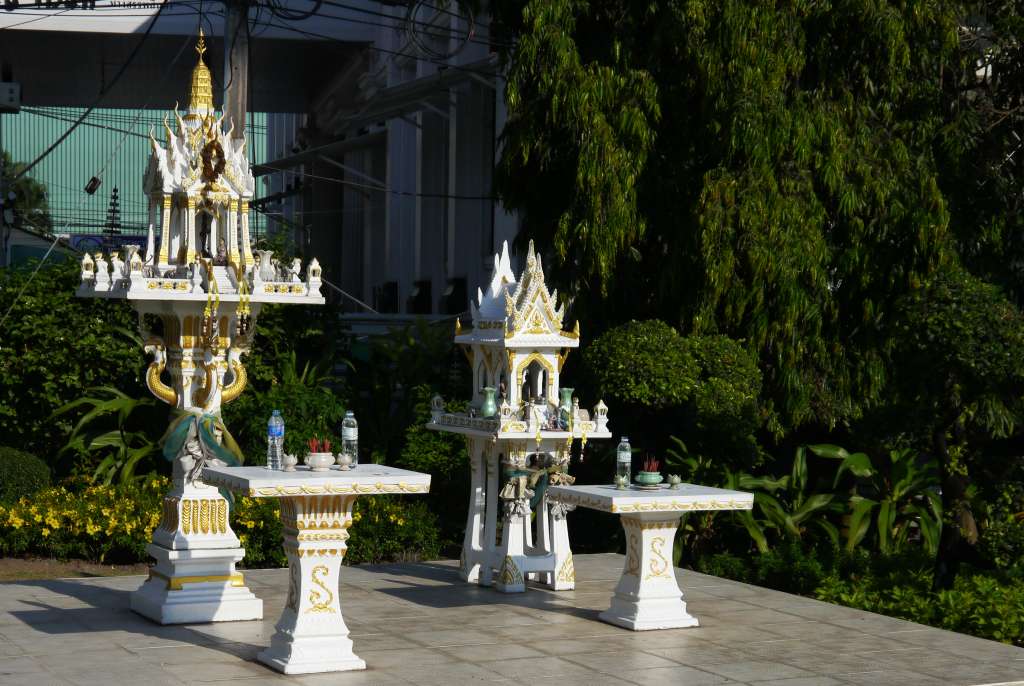
You commonly see two spirit houses side by side. The taller and grander of the two is called San Phra Phum, and home to a Hindu deity who, if respected, will protect the land. The smaller and more humble spirit house is the San Chao (or Jao) Thi, most commonly a home for the spirits that inhabited the land before a property was built there.
It’s usual for Thais to regularly offer gifts of incense, food, and drink, followed by the prayer-like Thai wai to show respect, sometimes with an accompanying request for luck or assistance.
What appears to many as a strange curiosity in Thailand is the placing of incense sticks, food, and drink on a small table or chair, or even on the pavement. This often happens outside small shops and bars that don’t have enough space to erect a spirit house.
Spirit Trees in Thailand
Spirits reside in some trees in Thailand, most notably the Sacred Fig Tree (Bodhi Tree) and the Takian Tree. Just like they do at spirit houses and Hindu shrines, Thais often visit them to pay their respects, ask for good fortune, and often to seek lucky lottery numbers.
Being home to spirits, the tree under which Buddha became enlightened, and where broken and unwanted Hindu and Buddhist figurines are placed out of respect rather than discarded, the Sacred Fig Tree is a perfect representation of Thailand’s spiritual fusion of Animism, Buddhism, and Hinduism.
Sacred and spirit trees of significance, such as the Sacred Tree at Naklua in Pattaya (see photo below), have their trunks wrapped with colored sashes and ribbons.
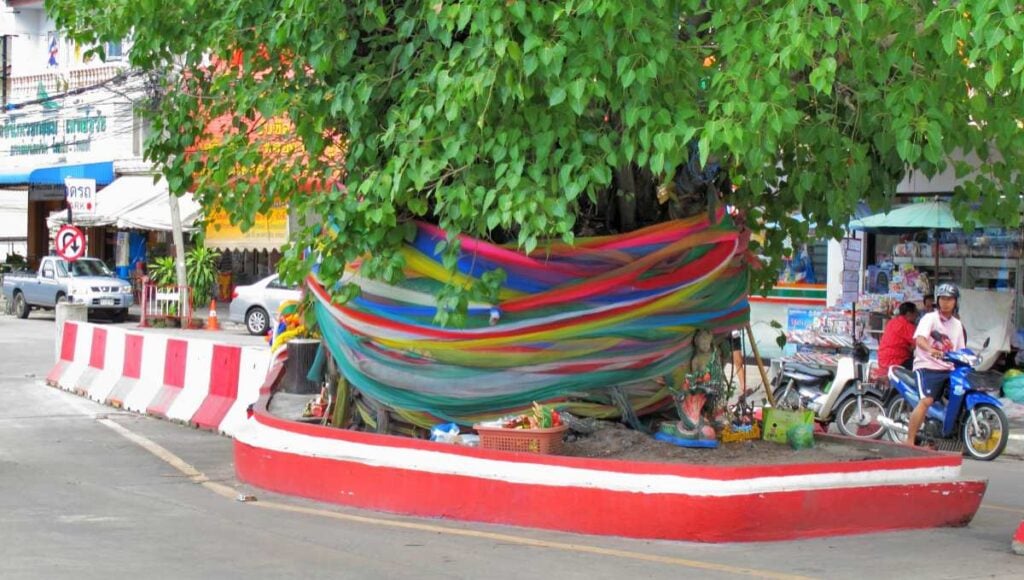
f you hear the beep of a horn while near the sacred tree in Naklua, it’s likely not from an impatient motorist, but from one showing respect to the spirits as they drive by.
Which Trees Are Spirit Trees in Thailand?
In Thailand, certain species of tree, such as the Sacred Fig, Takian, and Banyan, are more likely to be revered as spirit trees (phi ton mai) than others. However, whether due to age, size, location, or distinctive shape, any individual tree of any species may be regarded as a spirit tree based on local belief.
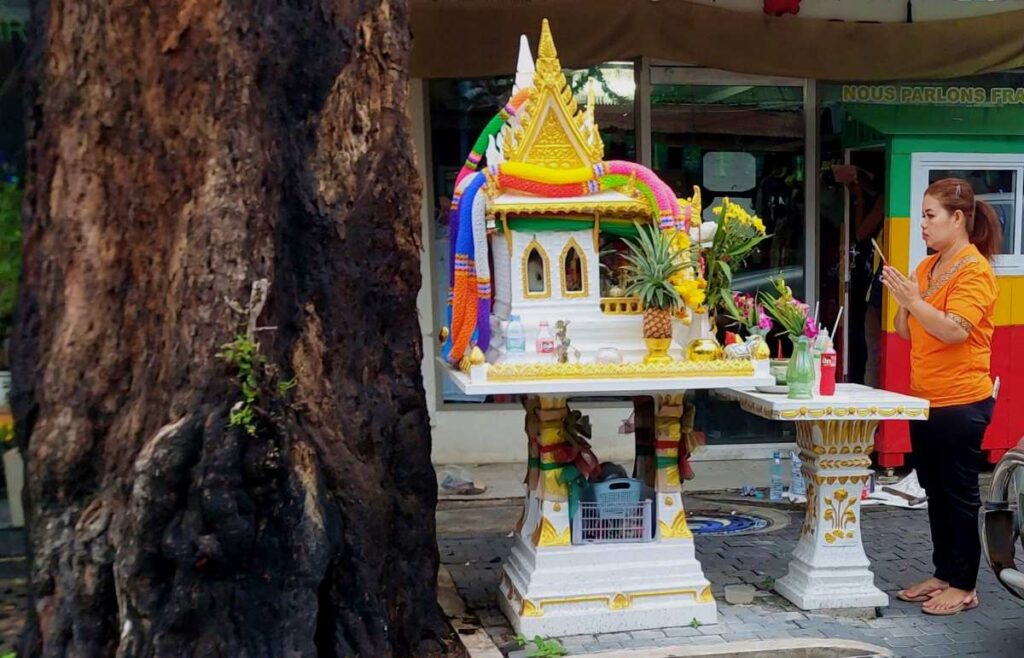
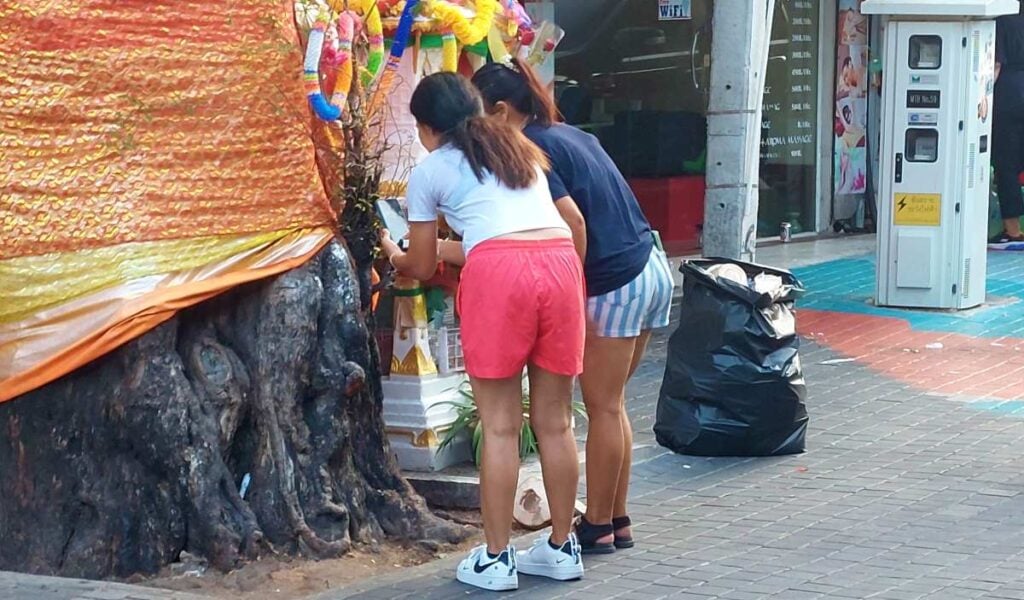
At the famous Tamarind Tree on Walking Street in Pattaya, for example, I’ve photographed locals (see images below) leaving offerings and waiing at the spirit house in front of the tree, and others searching the tree bark for lucky numbers, despite tamarind not generally being regarded as a spirit tree species.
Lak Mueang
Although not much in evidence unless you visit the shrine itself, and typically standing just a few meters high, the Lak Mueang (City Pillar) represents animist belief at its most expansive. Made of auspicious wood and housed in a grand shrine in the provincial capital, it is regarded as the dwelling place of the province’s guardian spirit.
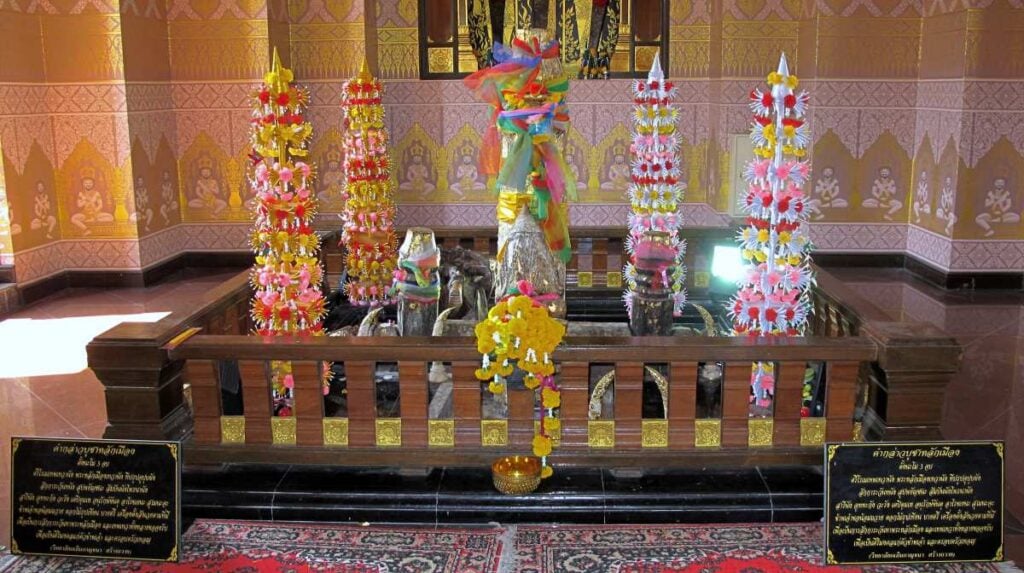
Here is a photo (above) I took while visiting Buriram, showing the Lak Mueang (center) and its accompanying pillars.
Thai Ghosts in The House
On a personal level, I tell myself I don’t believe in ghosts, but there have been occasions when the hair on the back of my neck has stood up, and one time when I thought I might have caught a ghost on camera?
When my wife told me she saw a ghost in the bedroom I dismissed it as a dream, but she argued her case quite convincingly. It was only when she lavished a rather sumptuous offering of food and drink for the spirits that I had to think twice, she has never done that before.
Thai Ghosts and Spirits Are Everywhere
It would seem that there is a ghost or spirit for every occasion and every place in Thailand, and the Thais’ belief in ghosts and spirits is steadfast. There are good Thai ghosts and bad ones, ancient ancestors, spirits of the land, spirits of the forest, river, lake, and sea. They must all be respected in one way or another; ghosts and spirits can do great favors for those who respect and attend to their whims, or they can bring catastrophe to the selfish or disrespectful. Animism might seem outdated to you and me, but to the Thais, it remains an integral part of everyday life.