
The wai is the traditional form of greeting in Thailand. While people in other countries may shake hands, kiss on the cheek, or bow, Thais press their palms together and raise them between chest and forehead height while saying “sa wat dee kha” if they are female or “sa wat dee krap” if they are male.
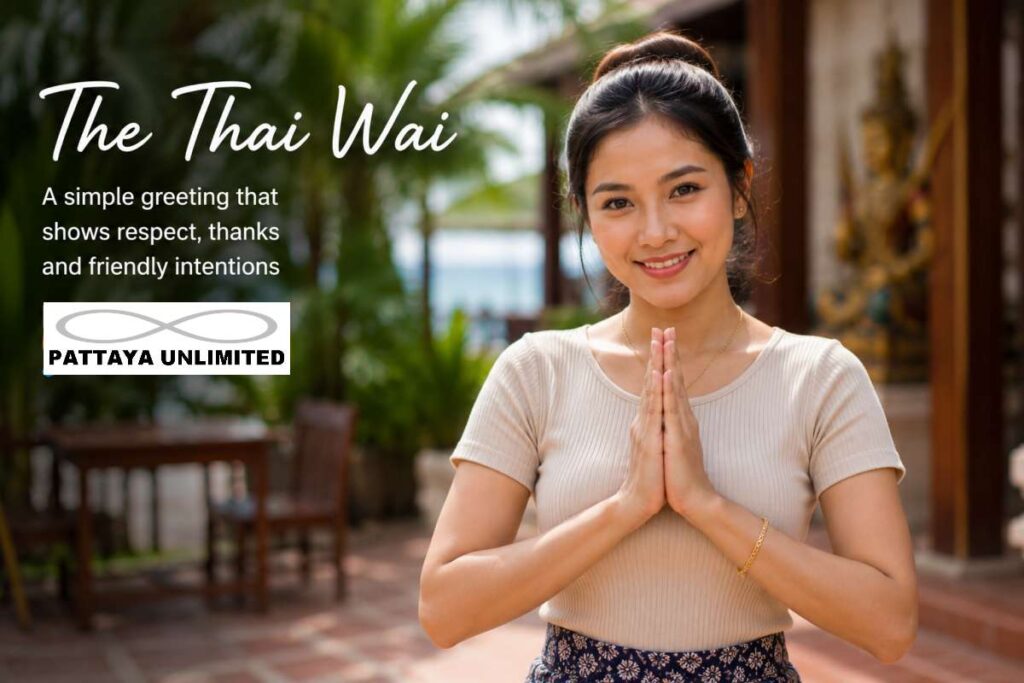
How Thais Wai
They place the palms of their hands together with the fingers pointing upwards and touching, much like a prayer position. How high they raise their hands depends on who they are greeting.
When greeting friends or people of a similar age or social standing, they raise their hands until their fingertips are just below or touching the chin.
When greeting people such as elders, employers, bosses, or teachers, they raise their hands so that their thumbs touch the chin and their fingertips reach the nose.
The highest wai, reserved for monks, Buddha images and members of the Royal Family, is made with the thumbs near the eyebrows and the fingertips reaching the forehead.
When Thais Wai
The person who wais first is usually the less senior in age or social standing. So, for example, a child would wai a parent, a student would wai a teacher. When entering a house or room with several people, or when meeting a group, they often greet everyone with a single wai, turning and bowing their heads in everyone’s general direction while saying “sa wat dee.”
The wai is a show of respect and reverence, used when visiting temples, while praying before Buddha images, and one that you’ll commonly see on the streets near markets in Pattaya if you’re up early enough to catch the monks from the local temple out collecting alms.
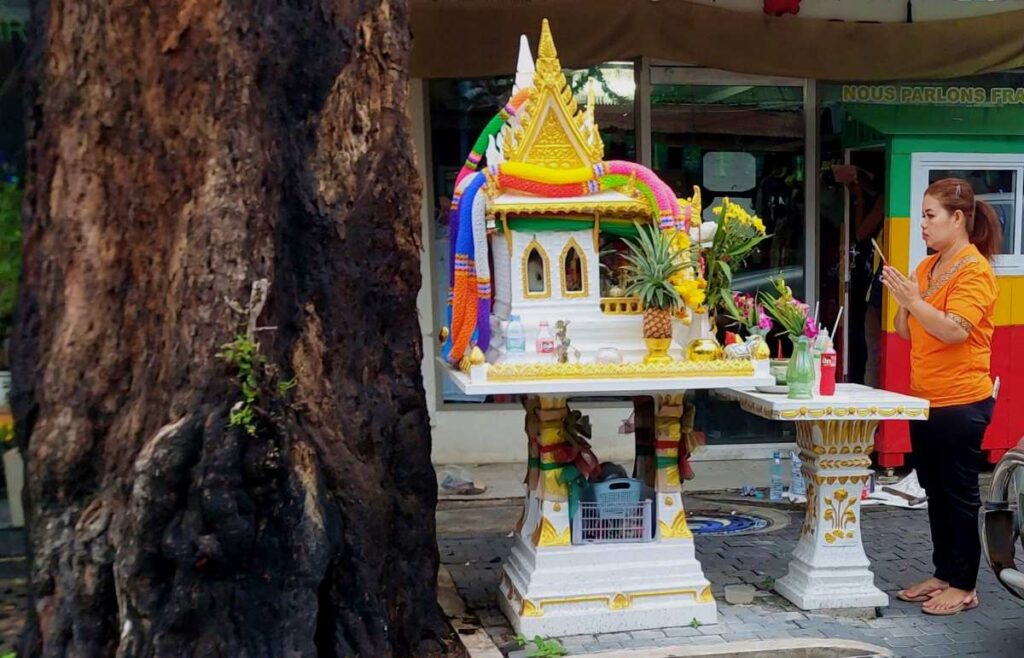
You’ll also see Thai people using the wai while visiting, or even just passing, places of spiritual significance, from animist spirit houses like the one pictured above on Walking Street in Pattaya to Hindu shrines and sacred fig trees.
Why There’s More to the Thai Wai
Because the wai is also a gesture of respect and goodwill, it is commonly used before making a request, when saying thank you, or when offering an apology. For example, a beggar might wai you in the hope that it will encourage a donation, then wai again to thank you for making one. Similarly, if someone accidentally bumps into you in the street, they may offer a wai while saying sorry, to which you might reply “mai pen rai,” meaning “no problem” or “it’s okay.”
Should Foreigners Wai in Thailand?
Foreigners are not expected to wai in most situations. For example, when entering hotels, restaurants, or other businesses where staff greet you with a wai, you can simply give a nod, smile, and say hello or thank you. After all, in those situations, they are welcoming you inside more than greeting you.
When you pay your bill in a bar or restaurant, or leave a tip, you will often receive a wai in return. As it’s a gesture of gratitude, you don’t need to return it.
When meeting people or being introduced to someone, it’s customary to wai, especially if they wai you first, but don’t feel you have to, a friendly hello is always welcome.
Times when it’s best to wai are when you want to make a good first impression, such as at a job interview or when meeting your girlfriend’s or boyfriend’s parents for the first time.
If you’re unsure how high to wai, a good general-purpose wai that will cover most situations is to place your fingertips just below the tip of your nose while bowing your head forward slightly. Thai people generally appreciate the gesture and won’t mind if you don’t get it right.
Origins of the Thai Wai
The Thai wai is believed to have its roots in the ancient Indian añjali mudrā, a gesture of respect that spread throughout Southeast Asia through Hinduism and Buddhism.