
When you visit Pattaya, or any place in Thailand, you will undoubtedly get a fiery introduction to Thai cuisine. Yes, Thai food is often extremely spicy; Thais seem to love it that way, and there are even some benefits to it.
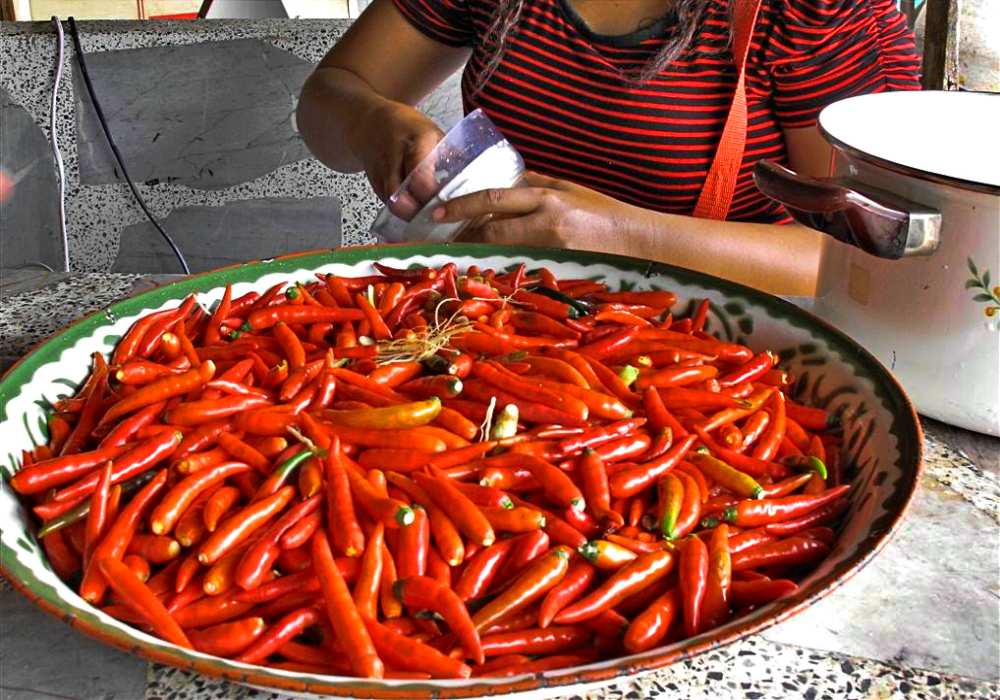
Some of the benefits of eating spicy food include:
- It can help you to keep cool, mainly because spicy food makes you sweat. That doesn’t sound great, does it? But the evaporating sweat then has a cooling effect on your body.
- According to the Mayo Clinic, research suggests that capsaicin in foods such as chilies may support circulation and help manage cholesterol levels.
- It opens up your sinuses and encourages the flow of mucus, which is good if you happen to be suffering from a cold or flu.
- Eating spicy food may also boost your endorphin levels and give you a feel-good factor, according to the Mayo Clinic. I love Thai food myself, and I’ve found that the one dish I enjoy a little spicier than usual does pick me up if I happen to be feeling down at the time. I call it my ultimate Thai feel-good food.
- They’re not just spicy, fresh chilies contain high quantities of vitamin C, while red peppers contain beta‑carotene, which the body converts into vitamin A.
- Other beneficial spices found in Thai food include ginger and turmeric. It’s believed ginger can ease arthritis pain, and turmeric is valued for its anti‑inflammatory qualities. When experiencing rough seas while working offshore, I’ve seen Thais resort to making fresh ginger tea to help with seasickness.
How hot are Thai chillies?
The most commonly used chili pepper in Thailand is the Bird’s Eye Chili, also known as the mouse‑dropping chili (Prik Kee Nu), measuring between 50,000 and 100,000 Scoville Heat Units (SHU). At the bottom of the scale is the bell pepper at 0 SHU, jalapeño peppers range between 3,000 and 8,000 SHU, and the hottest chili in the world (subject to change) is Pepper X at over 2,000,000 SHU.
Spicy Food Tips
If you eat something too spicy for you and your mouth is burning, try drinking milk, milk neutralizes the capsaicin and gives some relief. Other things that may help put out the fire are cheese, banana, citrus fruits such as lemon and lime or a sugar and water solution.
Always be sure to wash your hands after you have been preparing or handling spicy foods, especially chilies, as capsaicin can also cause burning on sensitive areas of skin and the eyes.
Spicy Food Warnings
There seems to be some argument over the effects of spicy food on stomach ulcers; one chain of thought suggests that spicy food can cause, or at the least aggravate, ulcers. The opposing argument believes spicy food has no detrimental effect on ulcers.
Spicy Food and Chili Facts
- There are over 400 varieties of chilli.
- Chilis are not native to Thailand, they were reputedly introduced by the Portuguese in the 16th century.
- Capsaicin is the ingredient which makes chillies hot.
- The heat of a chilli is measured in Scoville Heat Units.
When I first published this article (2010), the hottest chili in the world was the Bhut Jolokia (Naga Jolokia) from India, at just over 1,000,000 Scoville Heat Units (SHU). The world chili eating record belonged to Indian woman Anadita Dutta Tamuly, who managed to eat 51 Naga Jolokia chillies.
Later, it was the Carolina Reaper from the USA, which measured more than 2,200,000 SHU.
As of 2026, the Guinness World Record hottest chili is Pepper X, also from the USA, at an ultra-spicy 2,693,000 SHU. And the chili‑eating record belongs to Canadian Mike Jack, who holds several Guinness records, including eating 50 Carolina Reapers in 2023.