From space-age hotels, giant shopping malls, and unique wooden temples to new and old abandoned condos and discos, Pattaya is home to many spectacular, mysterious, and strange structures and buildings.
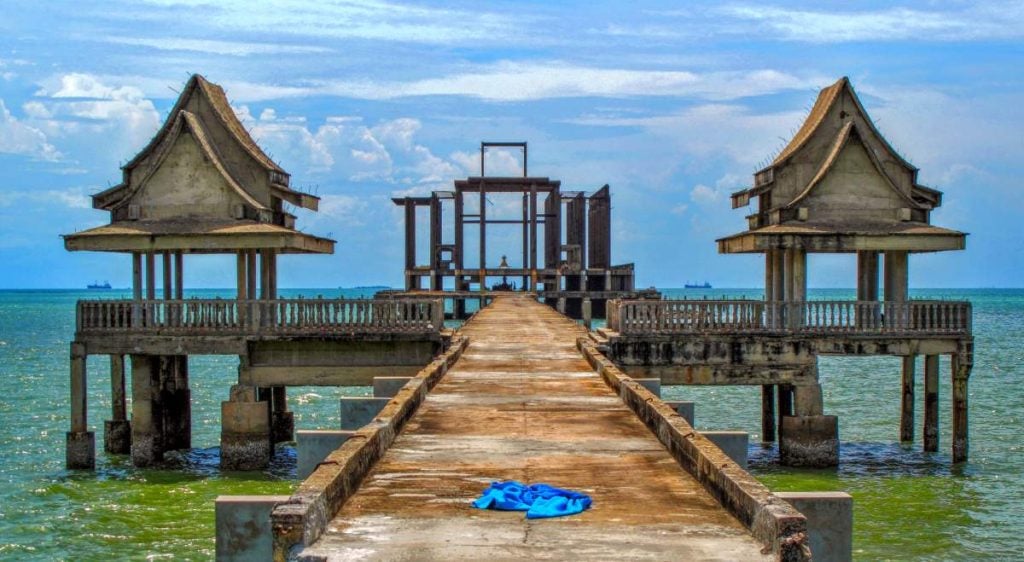
There are probably none that appear more strange than what was destined to be a magnificent Buddhist temple over the sea on the northern tip of Krating Lai beach in Pattaya.
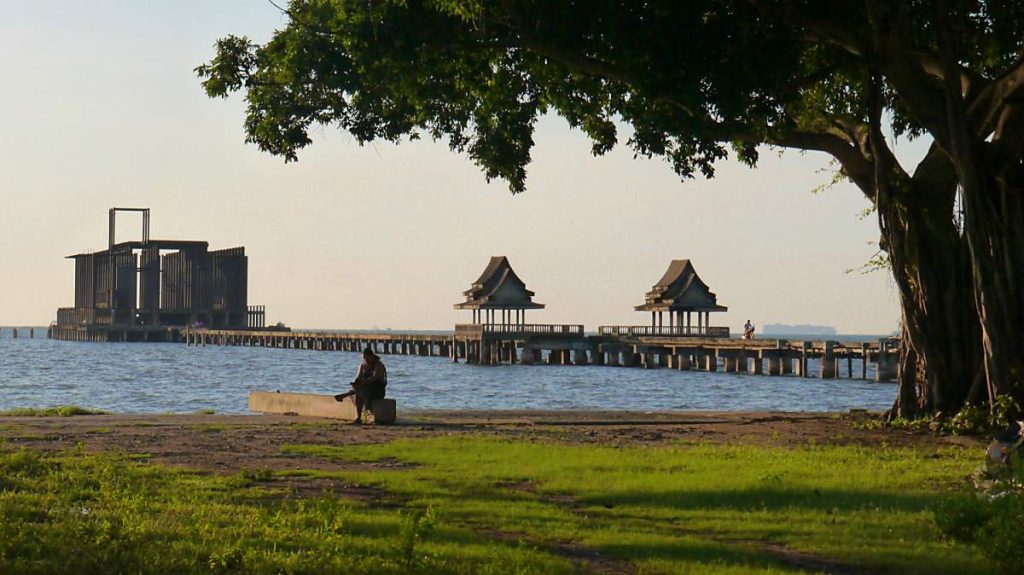
From a distance, even up close, you could be forgiven for putting two and two together and coming up with some kind of old industrial structure, long since abandoned or perhaps never even completed. After all, it looks nothing like a traditional Thai Buddhist temple.
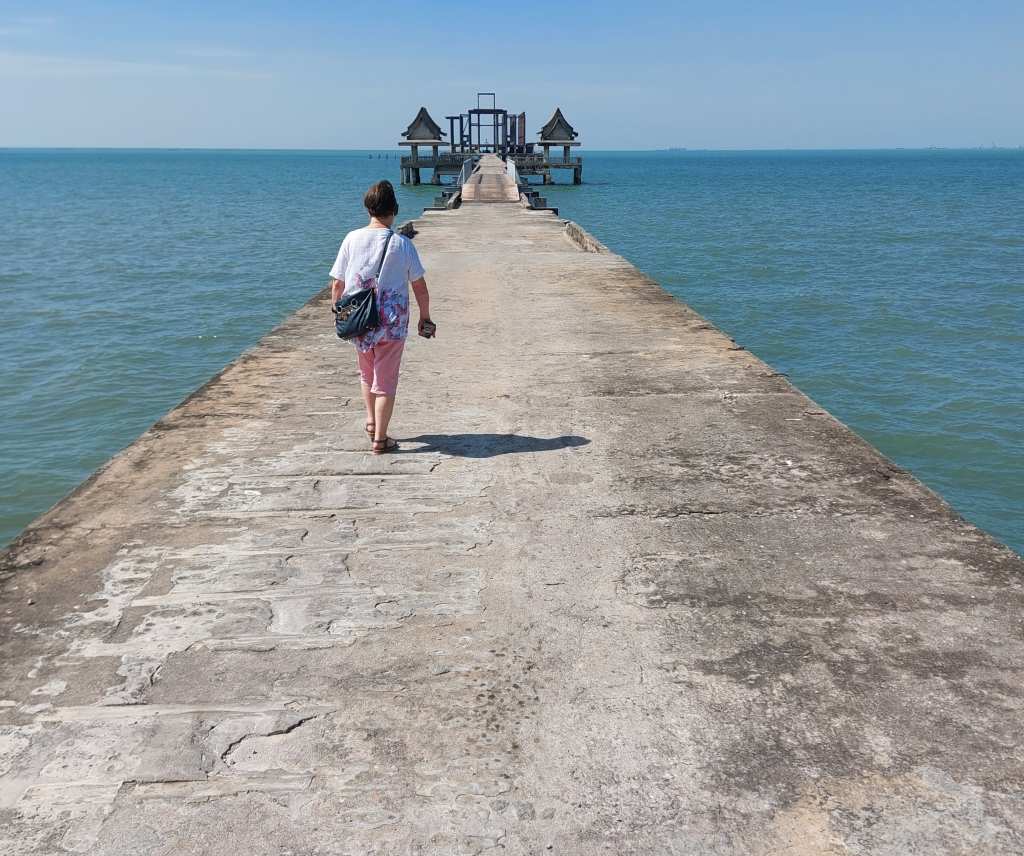
And why the heck would they build a Buddhist temple so far out at sea? 400 hundred meters out to sea, to be precise. It’s a long walk.

It’s quite an immense structure, 4 or 5 storeys high, made of concrete and lengths of tubular steel that would not look out of place if they were cross-members on an offshore oil rig. With the offshore industries of Laem Chabang being close by, maybe they are, or were.
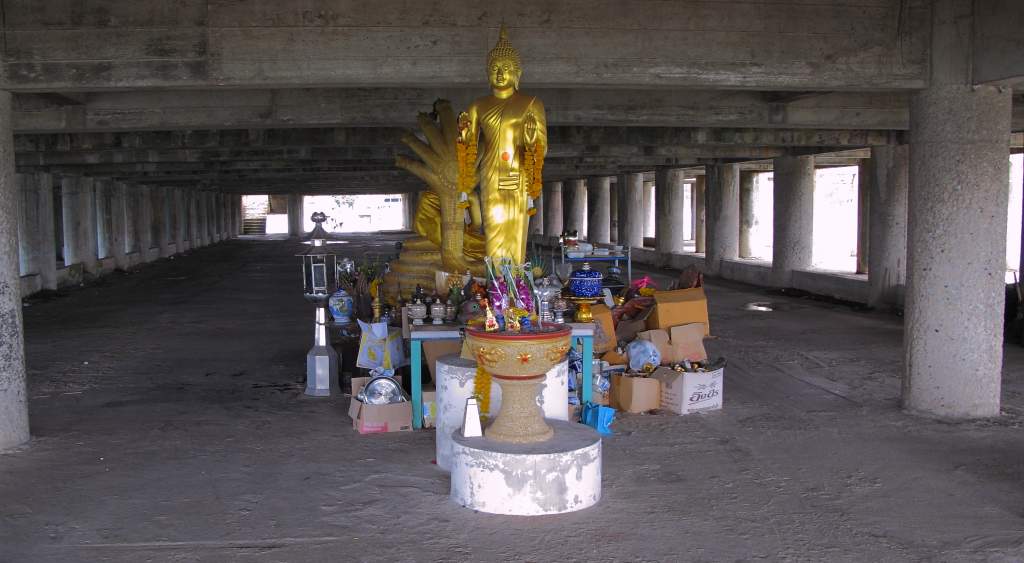
The resident Buddha is the first real sign that this is not an abandoned building. Incomplete, yes, but not forsaken.
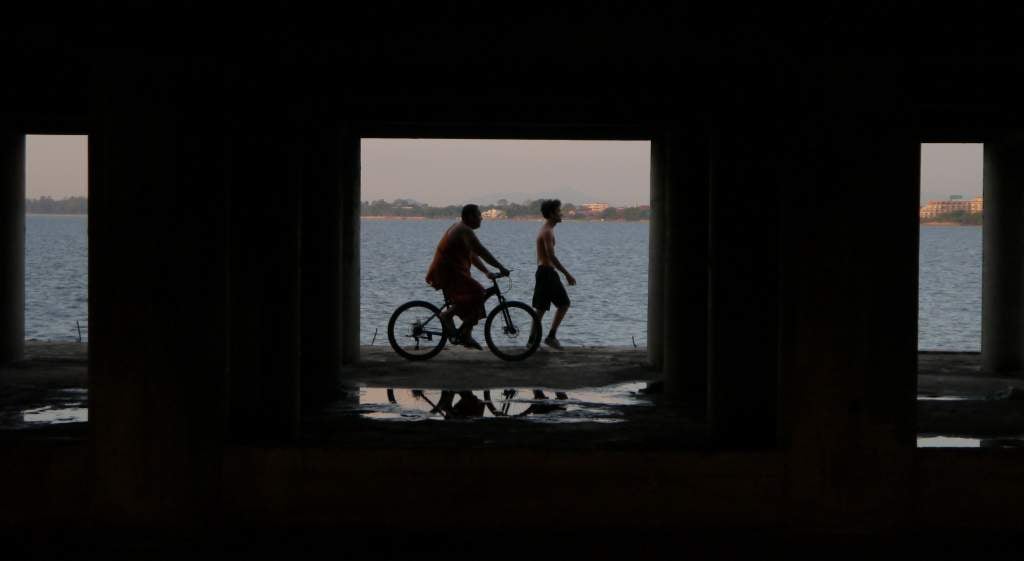
If you stick around, on most days, perhaps every day, there is a cycle of activity and life and death events at the temple.
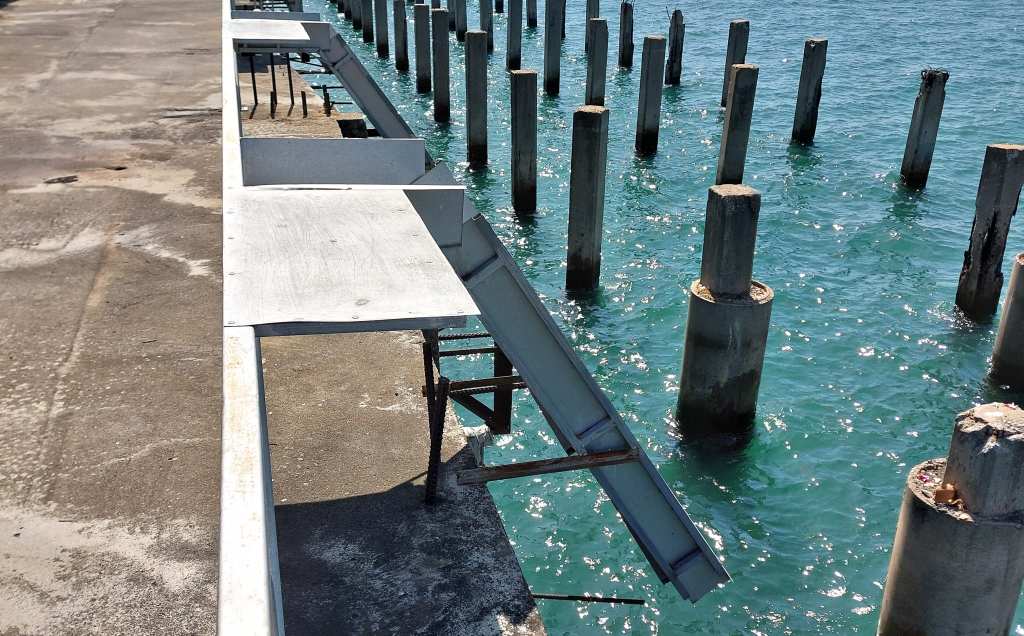
Steel chutes (photo above) positioned over the sea at the edge of the structure are used for scattering the ashes of the dead at sea. A ritual that is called “loi angkan” in Thai.
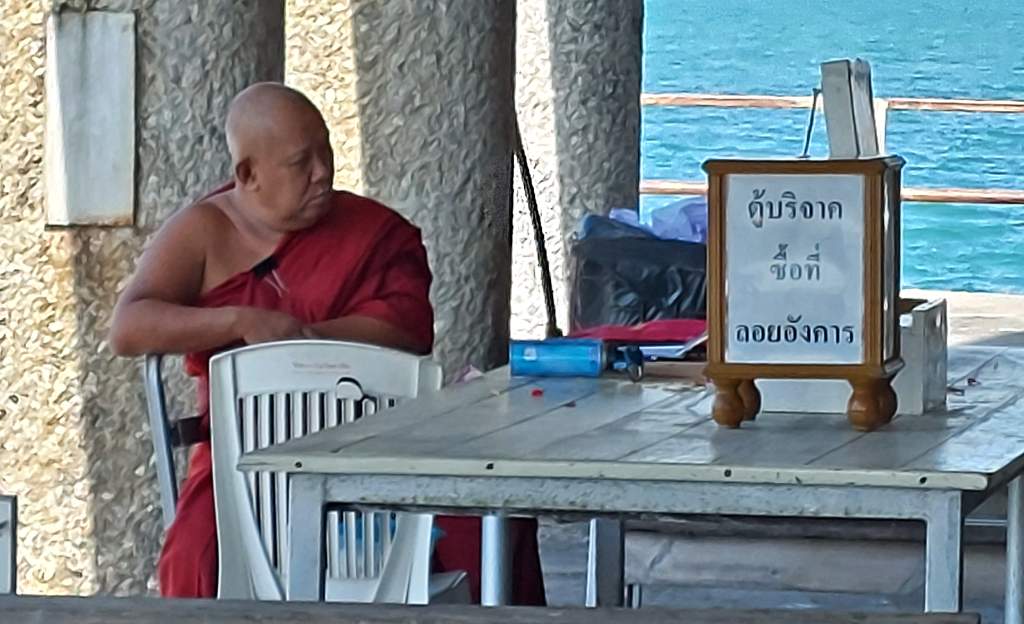
The text in the image above says “Donation cabinet from buy at Loi Angkan,” according to Google Translate.
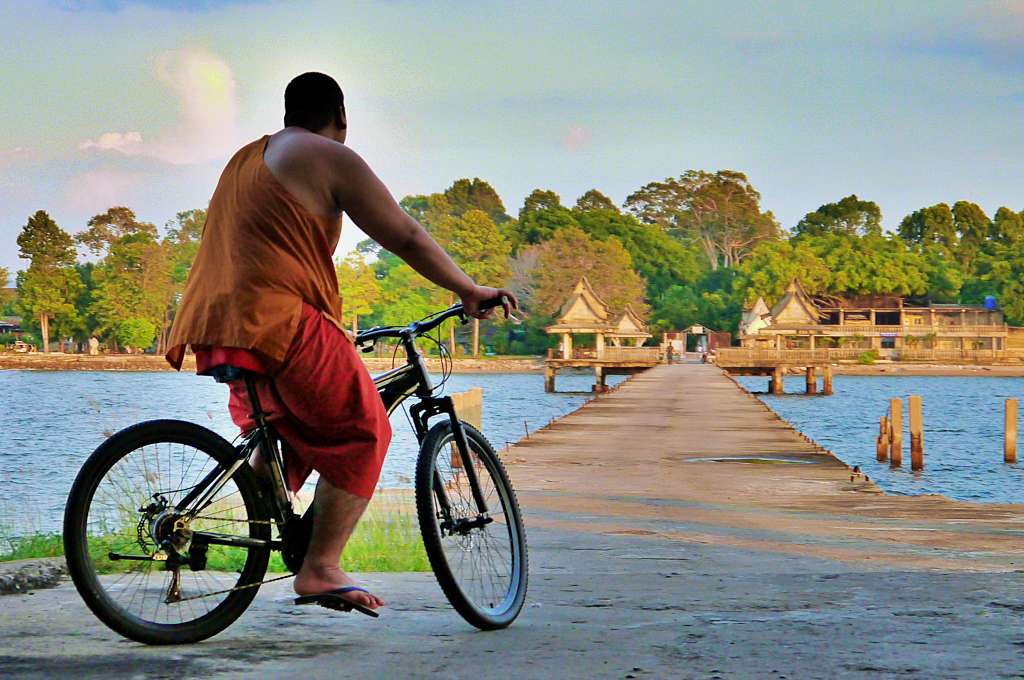
Strange as it may be, but along with Krating Lai Beach, it’s a very beautiful and photogenic place, one of many off-the-beaten-path places in Pattaya worth visiting.
The Story of The Strangest Temple in Pattaya
On Google Maps, the temple on the pier is called Ocean Sanctuary, Chittaphawan Monks College. Seeing as it’s part of the Djittabhawan College, Chittaphawan is possibly just an alternative spelling.
This brief history is the information passed on during a conversation with a gentleman who was overseeing the scattering of ashes (loi angkan) at the temple.
Djittabhawan Temple and College for Monks dates back to the late 1960s. In its heyday, there were around 2000 novice monks at the college.
Up to around the year 2003, the novice monks helped to build the temple on the pier. At about that time, funding for the building of the grand temple on the pier came to a halt when a senior figure belonging to the temple died.